
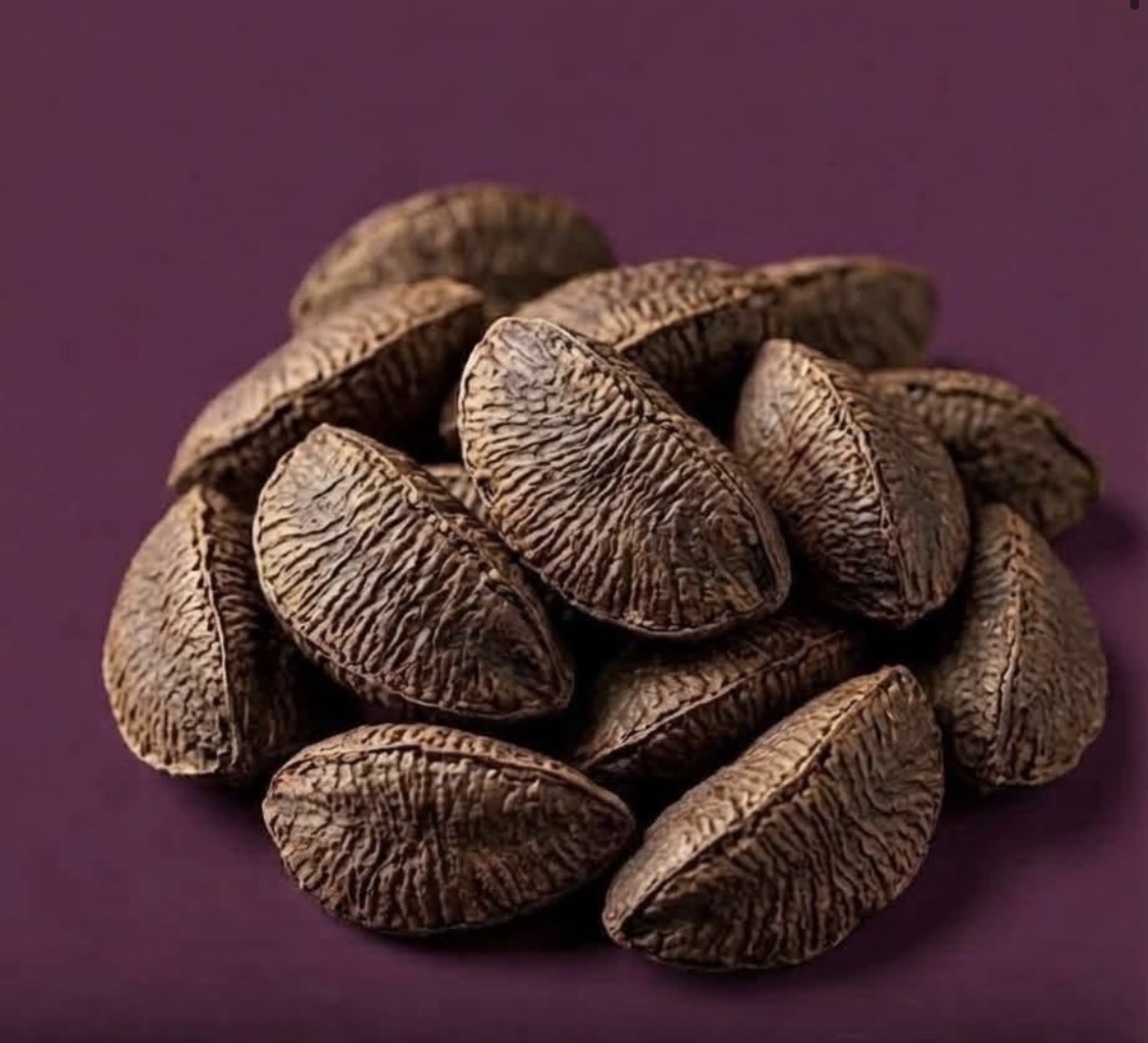
food traditions can become part of family identity.
But Brazil nuts are more than a nostalgic holiday snack. Their origin, unique growing environment, and impressive nutritional profile make them especially interesting.
Where Brazil Nuts Come From
Brazil nuts grow on towering trees native to the Amazon rainforest, particularly in countries such as Brazil, Bolivia, and Peru. Rather than growing like ordinary nuts on small orchard trees, they develop inside large, round pods that eventually fall naturally to the forest floor.
Each pod can contain multiple Brazil nuts. Local communities collect these fallen pods and process the nuts, making them an important source of income in some Amazonian regions.
Brazil nut trees are also remarkable for their longevity. Some can live for centuries and contribute to the structure and biodiversity of the rainforest ecosystem.
Why Brazil Nuts Are So Nutrient-Rich
Brazil nuts are particularly well known for their high selenium content.Selenium is a trace mineral that the body needs for normal thyroid function, immune system activity, and protection of cells from oxidative damage.
One of the unusual features of Brazil nuts is how much selenium they can contain compared with many other foods. The amount can vary considerably depending on growing conditions, soil composition, and other factors, but even a small serving can provide a substantial amount of the mineral.
Because Brazil nuts can be very high in selenium, eating large quantities regularly is not recommended. More is not necessarily better when it comes to this nutrient.
That unusually high selenium content is one reason a few Brazil nuts can be enough—so the next question is how much is reasonable to eat.
How Many Brazil Nuts Should You Eat?
There is no universal number that applies to everyone because the selenium content of individual Brazil nuts can vary widely. For
There’s more to discover. Continue to the next page for the rest of this article.
Selenium is a trace mineral that the body needs for normal thyroid function, immune system activity, and protection of cells from oxidative damage.
One of the unusual features of Brazil nuts is how much selenium they can contain compared with many other foods. The amount can vary considerably depending on growing conditions, soil composition, and other factors, but even a small serving can provide a substantial amount of the mineral.
Because Brazil nuts can be very high in selenium, eating large quantities regularly is not recommended. More is not necessarily better when it comes to this nutrient.
That unusually high selenium content is one reason a few Brazil nuts can be enough—so the next question is how much is reasonable to eat.
How Many Brazil Nuts Should You Eat?
There is no universal number that applies to everyone because the selenium content of individual Brazil nuts can vary widely. For
There’s more to discover. Continue to the next page for the rest of this article.
this reason, moderation is important.
Eating a small amount, such as one or a few nuts, can provide selenium and other nutrients without requiring a large serving. Regularly consuming large quantities could increase the risk of getting too much selenium over time.
Excessive selenium intake can cause unwanted effects, so Brazil nuts are best treated as a nutrient-dense food rather than something to eat in unlimited amounts.
Brazil Nuts and Healthy Eating
In addition to selenium, Brazil nuts provide healthy fats, protein, fiber, and other vitamins and minerals. Like other nuts, they can be included as part of a balanced eating pattern.
They can be enjoyed on their own, added to oatmeal or yogurt, mixed into salads, or incorporated into homemade snacks and desserts.
A Food That Connects Tradition and Nutrition
Brazil nuts represent more than just a healthy snack. For many families, they are connected to holiday traditions, shared
There’s more to discover. Continue to the next page for the rest of this
meals, and memories of cracking open nuts together.
At the same time, their origin in the Amazon rainforest and naturally high selenium content make them a fascinating food from a nutritional perspective.
Whether you remember them from childhood holiday gatherings or are discovering them for the first time, Brazil nuts offer an interesting combination of tradition, flavor, and nutrition. The key is simply to enjoy them in moderation.