
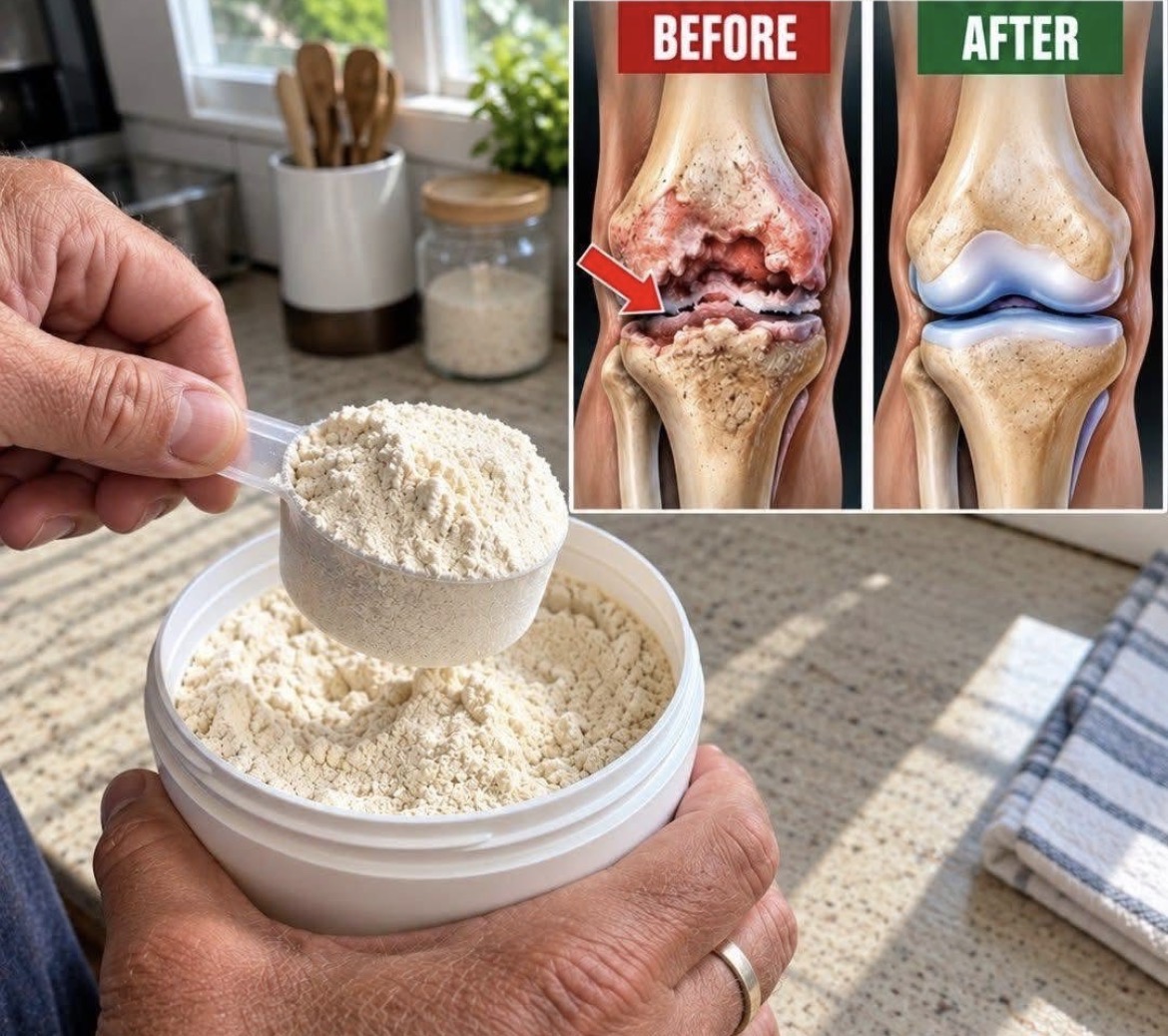
Claims that one scoop of a homemade powder can restore damaged knee cartilage and eliminate “bone-on-bone” pain within three hours are not supported by reliable medical evidence. Cartilage cannot be rebuilt overnight by a food or DIY supplement, and severe knee osteoarthritis should not be treated by delaying appropriate medical care.
That said, nutrition and simple daily habits can support joint health and may complement treatment for knee pain.
A Simple Protein-Rich Drink
If you want an easy nutritional option, you can make a basic yogurt-and-protein drink.
Ingredients
- ¾ cup plain Greek yogurt
- ½ cup milk or an unsweetened milk alternative
- ½ cup berries
- 1 tablespoon ground flaxseed
- Cinnamon, optional
Step 1: Add the Yogurt
Place the Greek yogurt in a blender.
Greek yogurt provides protein, which is important for maintaining muscle around the knee.
Step 2: Add the Milk
Pour in the milk and blend briefly.
Step 3: Add the Berries
Add fresh or frozen berries. They provide fiber and plant compounds while adding natural sweetness.
Step 4: Add Flaxseed
Add one tablespoon of ground flaxseed for additional fiber and healthy fats.
Step 5: Blend
Blend until smooth.
Enjoy it as part of a balanced meal rather than as a treatment for damaged cartilage.
Can Food Rebuild Knee Cartilage?
There is no specific food or powder that has been proven to regenerate severely damaged knee cartilage within hours.
However, maintaining a healthy weight can reduce the mechanical load placed on the knees. A nutritious diet can also help provide the protein, vitamins, minerals, and other nutrients needed for normal body function.
What Can Actually Help Knee Osteoarthritis?
Depending on the cause and severity of the problem, evidence-based approaches may include:
- Regular low-impact physical activity
- Strengthening the muscles around the knee
- Weight management when appropriate
- Physical therapy
- Pain-relieving treatments recommended by a healthcare professional
- Assistive devices when appropriate
- Injections or surgery in selected cases
Activities such as walking, swimming, cycling, or appropriately prescribed strengthening exercises may be easier on painful knees than high-impact activities.
What Does “Bone-on-Bone” Mean?
This phrase is commonly used to describe advanced osteoarthritis in which the protective cartilage has become severely reduced.
An MRI or X-ray can provide important information, but treatment decisions should consider symptoms, physical examination, imaging findings, activity level, and overall health together.
Having cartilage damage on an MRI does not automatically mean that surgery is immediately necessary.
When Should Knee Pain Be Evaluated?
See a healthcare professional if knee pain is persistent, worsening, or interfering with walking, sleep, work, or everyday activities.
Urgent evaluation is appropriate after a significant injury or when the knee becomes severely swollen, red, hot, deformed, or impossible to bear weight on.
The Bottom Line
A homemade powder may be a source of nutrients, but there is no credible evidence that one scoop can restore damaged knee cartilage or eliminate severe joint pain in three hours.
For long-term knee health, focus on appropriate exercise, adequate nutrition, weight management when relevant, and a treatment plan based on the actual cause and severity of your knee problem.